Get Hired in 2026: Resume, Portfolio & Cover Letter Tips
12 Oct 2026 · CTRLin
Getting hired in 2026 takes more than submitting a resume. Employers want to understand your skills, see evidence of your achievements, and know why you're the right person for the job.
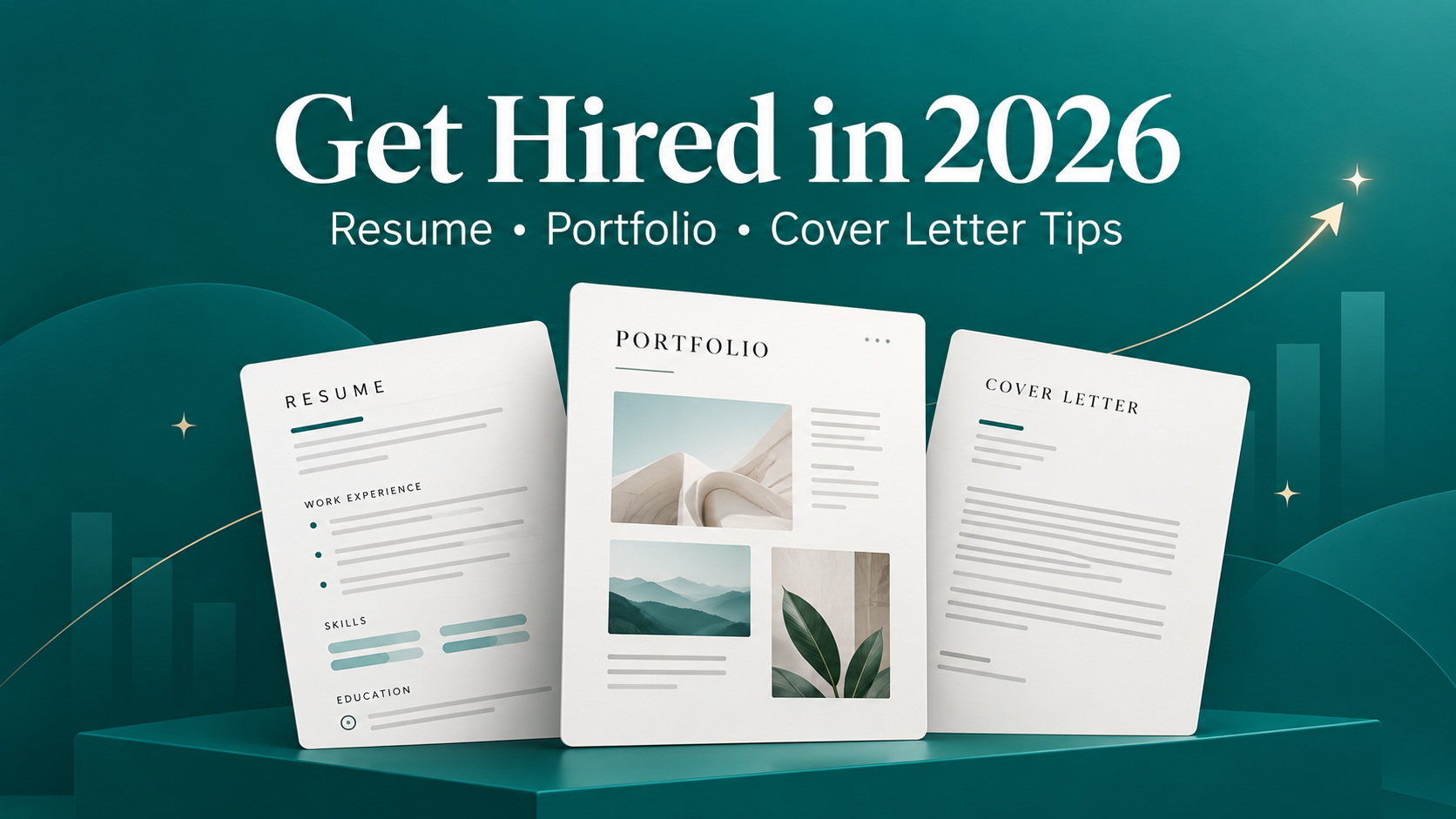
A strong job application brings three essential elements together: a professional resume, a portfolio that demonstrates your abilities, and a personalized cover letter that tells your career story.
Whether you're a student, fresh graduate, experienced professional, or career changer, knowing how to present these elements can improve your chances of securing an interview.
In this complete job application guide for 2026, you'll discover practical resume and cover letter tips, professional portfolio strategies, AI-powered job search techniques, and ways to stand out to recruiters.
1. What Makes a Job Application Stand Out in 2026?
A successful job application isn't necessarily the one with the most impressive design or longest list of qualifications. It's the one that clearly demonstrates why a candidate meets an employer's requirements.
An effective application should answer three questions:
- What can you do? Your resume summarizes your relevant skills, experience, and achievements.
- What have you accomplished? Your professional portfolio provides examples and evidence of your work.
- Why should the employer choose you? Your cover letter connects your qualifications to the company's needs.
Together, these documents create a stronger professional presentation.
Why These Three Elements Matter
| Application Element Main Purpose Recruiter Benefit | ||
| Resume | Summarizes qualifications and experience | Quickly identifies relevant skills |
| Portfolio | Demonstrates projects and accomplishments | Provides evidence of abilities |
| Cover Letter | Explains motivation and suitability | Adds context to your application |
Not every employer requires all three. However, preparing them in advance allows you to submit a more complete application whenever they are relevant.
2026 Job Application Tip: Focus on relevance, clarity, and credible evidence rather than complicated designs or generic claims.
2. Create an ATS-Friendly Resume That Gets Noticed
Your resume is often the first document an employer reviews. It should communicate your professional value quickly and accurately.
Many organizations use Applicant Tracking Systems (ATS) to organize applications, and some use automated tools to help review candidate information.
An ATS-friendly resume uses clear formatting, recognizable section headings, relevant terminology, and readable text.
How to Build an Effective Resume in 2026
Choose a professional format
Select a clean resume template with standard headings such as Professional Summary, Work Experience, Education, Skills, and Projects.
Avoid complicated layouts that make information difficult for recruiters or resume-parsing software to interpret.
Write a targeted professional summary
Your summary should highlight your experience, strongest skills, and the role you're pursuing.
For example:
Frontend Developer with 3 years of experience building responsive web applications using React, Next.js, and JavaScript. Skilled in improving interface usability, integrating APIs, and creating accessible user experiences.
This is more informative than a generic statement such as "Hardworking professional seeking a challenging opportunity."
Use relevant job description keywords
Study the job posting and identify important technical skills, qualifications, and responsibilities.
For example, if an employer requests React, TypeScript, REST APIs, and responsive design, include those terms where they accurately describe your experience.
Never add skills you cannot demonstrate.
Highlight achievements instead of responsibilities
Rather than writing:
Responsible for managing website updates.
Write:
Redesigned key website pages and improved mobile usability through responsive layouts and accessibility enhancements.
Whenever possible, include verified results such as reduced processing time, increased conversion rates, or completed projects.
Tailor your resume for each role
Different employers prioritize different qualifications. Adjust your professional summary, skills, and achievement bullets to emphasize the experience most relevant to each opportunity.
Resume Mistakes to Avoid
- Using the same generic resume for every job.
- Adding irrelevant skills and excessive keywords.
- Writing vague responsibilities without examples.
- Including outdated or incorrect contact information.
- Using formatting that makes the document difficult to read.
- Submitting an application without proofreading.
How CTRLin Can Help
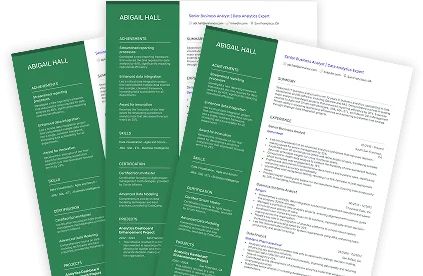
With CTRLin, job seekers can create professional resumes using customizable templates that present qualifications, experience, and achievements in a consistent format.
A structured resume builder can also simplify updates when applying for different positions.
Action Step: Create one complete master resume, then prepare a tailored version for each job application.
3. Build a Professional Portfolio That Proves Your Skills
A resume tells employers what you've done. A professional portfolio shows them the work behind those claims.
In 2026, portfolios can be valuable for developers, designers, marketers, writers, freelancers, students, and other professionals whose work can be demonstrated through projects or samples.
Even candidates with limited formal work experience may have useful academic, volunteer, or independent projects to showcase.
What Should You Include in a Professional Portfolio?
A strong introduction
Begin with a short professional introduction explaining your expertise, interests, and the type of opportunities you're seeking.
Example:
I'm a frontend developer passionate about creating responsive, accessible, and user-friendly digital experiences.
Your best projects
Choose three to five relevant projects rather than including every assignment you've completed.
Each project should explain:
- The problem or objective.
- Your individual contribution.
- The tools and skills you used.
- The solution or final deliverable.
- The outcome, supported by evidence where available.
Work samples and achievements
Depending on your profession, include relevant material such as website screenshots, live applications, design case studies, marketing campaigns, published articles, research projects, or presentations.
Contact information
Make it easy for an interested recruiter to contact you. Include a professional email address and relevant links, such as LinkedIn or GitHub.
Professional Portfolio Example
Consider a marketing professional applying for a digital marketing role.
Instead of simply claiming to have social media marketing experience, their portfolio could include:
Project: Social Media Campaign for a Local Business
Objective: Improve brand awareness and audience engagement.
Responsibilities: Campaign planning, content creation, scheduling, and performance analysis.
Tools: Canva, Google Analytics, and social media management tools.
Results: Present verified engagement, reach, website traffic, or conversion metrics.
This format helps employers understand the candidate's contribution and assess the quality of their work.
How to Make Your Portfolio Recruiter-Friendly
Keep your portfolio visually clean and easy to navigate. Make sure it works on mobile devices and that important projects are accessible without unnecessary clicks.
Use concise case studies, descriptive project titles, and readable text.
Most importantly, connect your portfolio to the job you're targeting.
A frontend developer should prioritize relevant coding projects, while a content strategist may focus on published work, content performance, and campaign results.
Build Your Portfolio With CTRLin
CTRLin offers professional portfolio templates designed to help users showcase projects, skills, and accomplishments.
You can use CTRLin's portfolio tools to organize your work into a professional presentation and share it with prospective employers.
Action Step: Select your three strongest projects and write a short case study explaining the objective, your work, and the results of each.
4. Write a Cover Letter That Makes Recruiters Interested
A resume summarizes your qualifications, while a cover letter explains how those qualifications connect to a particular role.
A well-written cover letter gives you an opportunity to communicate motivation, highlight selected achievements, and explain why you're interested in an organization.
Not every application requires a cover letter, but a thoughtful letter can strengthen your application when an employer requests one or welcomes additional context.
How to Write a Cover Letter for a Job in 2026
Start with a personalized introduction
Mention the position you're applying for and briefly explain your interest.
Avoid generic introductions that could be sent to any company.
Connect your skills to the job requirements
Choose one or two relevant accomplishments and explain their value.
For example, a developer could discuss improving a website's performance or delivering a complex feature.
Explain why you want the role
Show that you understand what the organization does and why the opportunity fits your professional interests.
Finish with a clear closing
Express your interest in discussing your qualifications further and thank the reader for their consideration.
Professional Cover Letter Example
Dear Hiring Manager,
I'm excited to apply for the Frontend Developer position at [Company Name]. With experience developing responsive web applications using React, Next.js, and JavaScript, I'm confident that my technical skills align with the role's requirements.
In my previous projects, I've worked on reusable UI components, API integrations, and responsive interfaces that improve the user experience. My portfolio includes examples of these projects and explains my approach to solving development challenges.
I'm particularly interested in this opportunity because of your team's focus on creating high-quality digital products. I'd welcome the opportunity to contribute my frontend development skills and continue growing alongside your team.
Thank you for considering my application. I look forward to the possibility of discussing how I can contribute.
Sincerely,
[Your Name]
Can You Use AI to Write a Cover Letter?
Yes. An AI cover letter builder can help you create an initial structure, organize relevant experience, and improve the clarity of your writing.
However, an AI-generated draft should never replace your genuine professional story.
Review every statement, remove generic language, and verify that the letter accurately reflects your qualifications.
AI tools should assist your writing—not invent achievements or motivation.
Create a Cover Letter With CTRLin
CTRLin provides cover letter templates and AI-assisted tools that help job seekers prepare personalized applications.
Use a draft as a starting point, then tailor it to the specific employer and position.
Action Step: Prepare a reusable cover letter framework, but customize the opening, relevant achievements, and company-specific details for each application.
5. How to Combine Your Resume, Portfolio, and Cover Letter
One of the most effective job application tips for 2026 is to ensure that your three professional documents tell one consistent story.
They should complement each other rather than repeat identical information.
Imagine you're applying for a UI/UX Designer position.
Your resume might say:
Designed responsive user interfaces and developed interactive prototypes using Figma.
Your portfolio could show:
A complete UI/UX case study featuring research, wireframes, prototypes, design decisions, and usability improvements.
Your cover letter could explain:
My experience translating user research into accessible interfaces aligns with your company's focus on intuitive digital products. I've included a relevant case study in my portfolio demonstrating my design approach.
Together, these elements communicate skills, evidence, and motivation.
The Three-Part Job Application Formula
Resume → Qualifications
Show employers what you know and what you've accomplished.
Portfolio → Evidence
Demonstrate how you apply your skills to real projects.
Cover Letter → Connection
Explain why your experience matters to this particular employer.
The result is a clear, professional application that makes it easier for recruiters to evaluate your suitability.
6. How to Get Hired in 2026 Using AI and Smart Job Search Strategies
AI tools can help streamline parts of the job search, but successful applications still require judgment, research, and personalization.
Instead of sending large numbers of generic applications, develop a more targeted process.
Research Employers Before Applying
Understand the company's products, services, industry, and responsibilities associated with the role.
Identify the skills most important to the employer and determine how your experience matches those requirements.
Use AI to Analyze Job Descriptions
AI tools can help summarize job postings, organize requirements, identify relevant terminology, and suggest areas where your application needs improvement.
For example, you can use the following prompt:
"Analyze this job description and identify the five most important skills and qualifications. Compare them with my resume, highlight genuine matches, and suggest improvements without inventing experience."
This allows AI to support accurate, personalized application writing.
Develop a Consistent Professional Brand
Your resume, portfolio, cover letter, and LinkedIn profile should present consistent information about your work experience, skills, and career goals.
Use a professional tone and ensure that dates, job titles, and accomplishments do not contradict one another.
Build Relationships, Not Just Applications
Connect with professionals in your target industry, participate in relevant communities, attend career events, and seek introductions when appropriate.
Networking should focus on genuine professional relationships rather than simply requesting job referrals.
Prepare for Interviews Before You Get Invited
Your application documents provide excellent material for interview preparation.
Review your achievements and portfolio case studies. Practice explaining your individual contribution, the challenges you faced, and the results you achieved.
Employers may ask about any project or skill listed in your application, so be prepared to explain your experience accurately.
7. Job Application Tips for Fresh Graduates and Experienced Professionals
The same job application strategy won't work equally well for every candidate.
For Students and Fresh Graduates
If you have limited professional experience, emphasize education, internships, volunteering, certifications, and relevant projects.
Your portfolio can include coursework, personal projects, academic research, or practical assignments.
Focus on transferable skills such as communication, teamwork, analytical thinking, and problem-solving, supported by examples.
For Experienced Professionals
Highlight career achievements, leadership responsibilities, specialized expertise, and measurable results.
Prioritize accomplishments that demonstrate your ability to solve problems relevant to the position.
Include portfolio material when it provides meaningful evidence of your work.
For Career Changers
Focus on transferable skills and projects that demonstrate your readiness for a new field.
Use your portfolio to show what you've learned or built, and your cover letter to explain why you're making the transition.
For example, someone moving from customer support into UX research could highlight customer interviews, communication skills, user feedback analysis, and relevant research projects.
The goal is to help recruiters understand how your existing experience supports your new career direction.
8. Common Job Application Mistakes to Avoid in 2026
Even qualified candidates can weaken an application by overlooking important details.
Here are some common mistakes and practical solutions.
| Common Mistake Better Approach | |
| Sending the same resume everywhere | Tailor your resume to each role |
| Creating a portfolio with too many unrelated projects | Feature your strongest relevant work |
| Copying a generic cover letter | Explain why you're interested in the specific company |
| Overusing AI-generated phrases | Include authentic examples and natural language |
| Adding unsupported skills | List skills you can demonstrate |
| Ignoring application instructions | Follow the employer's requirements |
| Providing broken portfolio links | Test every link before submitting |
| Using inconsistent career information | Align your documents and professional profiles |
Does an ATS-Friendly Resume Guarantee an Interview?
No. ATS-friendly formatting helps keep your information readable, but it cannot guarantee selection.
Employers may evaluate qualifications, experience, location, availability, portfolio quality, and many other factors.
Focus on presenting relevant evidence rather than trying to manipulate an automated screening system.
9. Your 2026 Job Application Checklist
Before submitting your next application, use this checklist to confirm that your materials are professional, consistent, and relevant.
Resume Checklist
- Updated contact information and professional summary.
- Relevant skills aligned with the job description.
- Clear formatting and standard section headings.
- Accurate employment history and achievements.
- No spelling or grammatical errors.
Portfolio Checklist
- Professional introduction and easy navigation.
- Three to five strong, relevant projects where available.
- Clear explanation of your contributions.
- Working project links and contact details.
- Mobile-friendly presentation.
Cover Letter Checklist
- Correct company name and job title.
- Personalized opening.
- Relevant skills and specific examples.
- Genuine explanation of your interest.
- Concise, professional closing.
Final Submission Checklist
- Followed the employer's requested file format.
- Checked all links and attachments.
- Confirmed consistent information across documents.
- Reviewed AI-assisted content for accuracy.
- Saved a copy of the job description for interview preparation.
10. Build a Complete Job Application With CTRLin
Creating a resume, building a portfolio, and writing a personalized cover letter can feel overwhelming when you're managing multiple applications.
A more organized approach helps you maintain consistent professional information while adapting your materials to different opportunities.
CTRLin helps job seekers bring these three important career assets together.
Create Your Professional Resume
Use customizable resume templates to organize your qualifications, experience, skills, and accomplishments.
Showcase Your Work With a Portfolio
Present relevant projects and demonstrate the abilities that support your professional claims.
Prepare a Personalized Cover Letter
Use cover letter templates and AI-assisted drafting tools to create a professional starting point for each application.
Whether you're applying for your first job, exploring a career change, or pursuing a more advanced role, CTRLin provides tools to help you build and present your career story.
Ready to strengthen your next application?
Explore CTRLin's Resume, Portfolio & Cover Letter Builders
Frequently Asked Questions (FAQs)
1. How can I get hired faster in 2026?
Focus on relevant job opportunities, customize your application materials, build professional connections, and prepare thoroughly for interviews. A targeted approach can help you avoid wasting time on unsuitable applications, although no strategy guarantees faster hiring.
2. Do I need a resume, portfolio, and cover letter for every job?
Not necessarily. A resume is commonly required, while portfolios and cover letters depend on the role and employer. A portfolio is especially useful when work samples demonstrate your abilities. Always follow the application instructions.
3. What are the best job application tips for 2026?
Tailor your resume, present evidence of your skills, personalize your cover letter, maintain a consistent professional profile, and use AI tools responsibly to improve your application materials.
4. How do I make my resume ATS-friendly?
Use standard headings, readable formatting, relevant keywords, clear work history, and accurate information. Avoid complex layouts that may interfere with automated text extraction, and follow the employer's file-format instructions.
5. Can fresh graduates create a professional portfolio?
Yes. Fresh graduates can showcase academic projects, internships, volunteer work, independent projects, and practical assignments that demonstrate job-relevant skills.
6. Is using an AI cover letter builder a good idea?
An AI cover letter builder can help generate a first draft, improve structure, and suggest clearer wording. Always personalize the content, verify its accuracy, and follow any employer policies regarding AI-assisted applications.
7. What should I include in a portfolio for job applications?
Include an introduction, relevant projects, examples of your work, descriptions of your contributions, and contact information. Focus on quality and relevance rather than quantity.
8. How can I stand out to recruiters without extensive work experience?
Highlight internships, personal projects, academic achievements, volunteer experience, and demonstrable skills. Use a portfolio to show evidence of your abilities and a cover letter to explain why you're suited to the position.
9. Should my resume and portfolio contain the same information?
They should be consistent but not identical. Your resume should summarize relevant achievements, while your portfolio provides deeper project details, work samples, and supporting evidence.
10. Can CTRLin help me prepare all three job application documents?
CTRLin provides resume templates, portfolio-building tools, and cover letter features that can help you create coordinated professional application materials.
Final Thoughts: Your Next Opportunity Starts With a Strong Application
Getting hired in 2026 isn't simply about applying to more jobs. It's about helping employers understand your skills, recognize your achievements, and see why you're a strong fit for their organization.
A professional resume introduces your qualifications. A well-organized portfolio provides evidence of your abilities. A personalized cover letter connects your professional story to the employer's needs.
When these three elements work together, they create a clearer and more compelling application.
Build your professional presence, apply with purpose, and make every application count.
Start creating your resume, portfolio, and cover letter with CTRLin today.
Get Exclusive Updates & Resume Builder Features
Subscribe to our newsletter and stay ahead with the newest tools, design updates, and job-winning tips.