Best Resume Keywords for ATS: How to Make Your Resume Stand Out
09 Aug 2026 · CTRLin
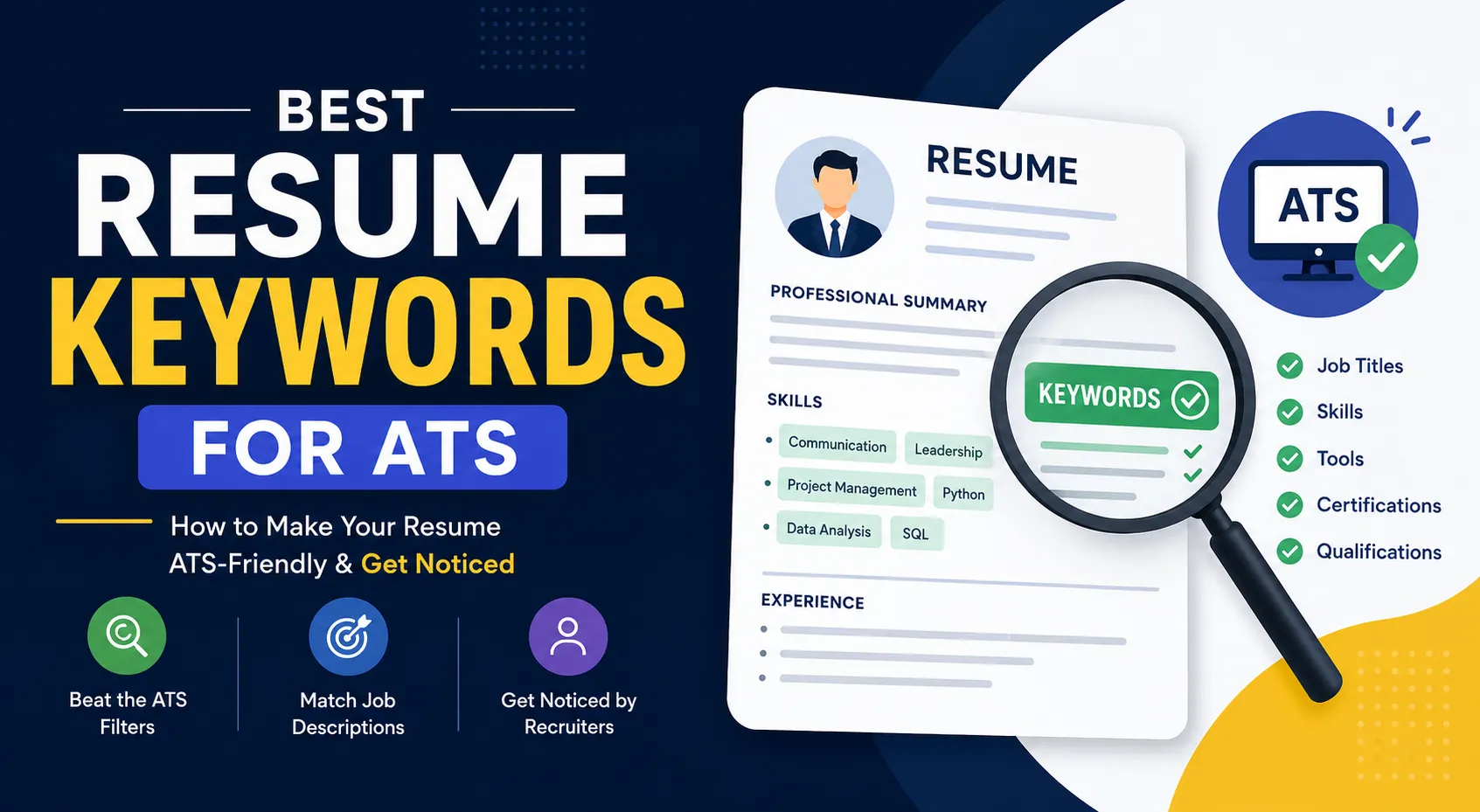
Finding the right job is not only about having the right experience. Before your resume reaches a recruiter, it may first need to pass through an Applicant Tracking System (ATS).
Many companies use ATS software to collect, organize, and screen resumes. These systems can scan your resume for specific keywords, skills, qualifications, job titles, and experience that match the job description.
That means having the right resume keywords can make a significant difference in whether your resume gets noticed.
In this guide, you'll learn what ATS resume keywords are, which keywords to use, where to place them, and how to create an ATS-friendly resume that gives you a better chance of reaching a recruiter.
What Are ATS Resume Keywords?
ATS resume keywords are words and phrases that an Applicant Tracking System looks for when evaluating a resume.
These keywords usually come directly from the job description and can include:
- Job titles
- Technical skills
- Soft skills
- Software and tools
- Certifications
- Qualifications
- Industry terminology
- Job-specific responsibilities
- Educational requirements
For example, if a company is hiring a Frontend Developer and the job description mentions:
- React
- JavaScript
- HTML
- CSS
- Git
- REST APIs
- Responsive Design
These terms can become important keywords for a candidate applying for that position.
Instead of writing:
"Developed websites using different technologies."
A stronger ATS-friendly version could be:
"Developed responsive web applications using React, JavaScript, HTML, CSS, and REST APIs."
The second version provides specific keywords that are relevant to the position.
Why Are Resume Keywords Important for ATS?
Recruiters can receive hundreds or even thousands of applications for a single position. Reviewing every resume manually can take a lot of time.
An ATS helps companies manage this large number of applications by organizing and filtering resumes according to different criteria.
If your resume doesn't contain important terms related to the job, the system may not identify your resume as a strong match.
However, this doesn't mean you should simply fill your resume with as many keywords as possible.
The goal is to use relevant keywords naturally and honestly throughout your resume.
A good ATS resume should satisfy both:
ATS software + Human recruiters
Your resume needs to be easy for software to read while also being clear, professional, and convincing to the person who eventually reviews it.
Types of Resume Keywords You Should Use
There isn't one universal list of ATS keywords that works for every job.
The best keywords depend on the position, company, and industry.
Here are the main types of keywords you should consider.
1. Job Title Keywords
The job title is often one of the most important keywords.
For example:
- Software Engineer
- Frontend Developer
- Backend Developer
- Full Stack Developer
- Marketing Manager
- Digital Marketing Specialist
- Graphic Designer
- Data Analyst
- Project Manager
- Sales Executive
- HR Specialist
- Financial Analyst
If the job posting says "Software Engineer", and that title accurately describes your experience, consider using the same terminology in your resume.
For example:
Software Engineer | ABC Technologies
Instead of using a completely different title that doesn't match the employer's terminology.
Never change your job title to something inaccurate just to match a posting. Your resume should remain truthful.
2. Technical Skills
Technical skills are particularly important for technology, engineering, finance, design, and other specialized positions.
Examples include:
Web Development
- HTML
- CSS
- JavaScript
- TypeScript
- React
- Next.js
- Vue.js
- Angular
- Node.js
- PHP
- Laravel
- Python
- REST API
- Git
- SQL
- MySQL
- PostgreSQL
Data & Analytics
- Data Analysis
- SQL
- Python
- Excel
- Power BI
- Tableau
- Data Visualization
- Statistics
- Machine Learning
Design
- Adobe Photoshop
- Illustrator
- Figma
- UI Design
- UX Design
- Wireframing
- Prototyping
- Responsive Design
The important thing is to include only skills you actually have.
3. Soft Skills
ATS systems can also look for soft skills mentioned in a job description.
Common examples include:
- Communication
- Leadership
- Teamwork
- Problem Solving
- Critical Thinking
- Time Management
- Collaboration
- Adaptability
- Decision Making
- Organization
- Creativity
- Customer Service
However, simply creating a list of soft skills isn't enough.
Whenever possible, demonstrate these skills through your work experience.
Instead of:
Leadership
Try:
Led a team of 5 developers to deliver a web application two weeks ahead of schedule.
This provides context and makes the skill more convincing to a recruiter.
4. Industry-Specific Keywords
Different industries use different terminology.
For example, a marketing resume might include:
- SEO
- Search Engine Optimization
- Content Marketing
- Google Analytics
- Social Media Marketing
- Email Marketing
- Lead Generation
- Conversion Rate Optimization
- PPC
- Digital Marketing
A finance resume might include:
- Financial Analysis
- Budgeting
- Forecasting
- Financial Reporting
- Accounts Payable
- Accounts Receivable
- Excel
- QuickBooks
- Risk Management
A project management resume might include:
- Project Management
- Agile
- Scrum
- Kanban
- Stakeholder Management
- Project Planning
- Risk Management
- Jira
- Asana
- Team Leadership
Use terminology that is relevant to your target position and industry.
5. Software and Tools
Many job descriptions mention specific tools or platforms.
For example:
- Microsoft Excel
- Microsoft Office
- Google Workspace
- Salesforce
- HubSpot
- Jira
- Trello
- Asana
- Slack
- Figma
- GitHub
- Docker
- AWS
- Azure
If you have experience with a tool mentioned in the job description, include it in your resume.
For example:
"Managed development tasks using Jira and collaborated with the team through GitHub."
This is stronger than simply saying:
"Used project management tools."
Specific terminology is easier for both ATS software and recruiters to understand.
6. Certifications and Qualifications
Certifications can also act as important resume keywords.
Examples include:
- PMP
- AWS Certified Solutions Architect
- Google Analytics Certification
- CompTIA A+
- Certified ScrumMaster
- Microsoft Certified
- Cisco CCNA
- CPA
If a job requires or prefers a particular certification and you have it, make sure it is clearly visible on your resume.
Best Resume Keywords by Career Field
Below are some examples of commonly used ATS keywords across different career fields.
Software Developer
Common keywords include:
- JavaScript
- React
- Node.js
- Python
- Java
- PHP
- Laravel
- SQL
- Git
- GitHub
- REST API
- API Integration
- Database Management
- Agile
- Scrum
- Debugging
- Software Development
- Web Development
Marketing Specialist
Common keywords include:
- Digital Marketing
- SEO
- SEM
- Content Marketing
- Social Media Marketing
- Email Marketing
- Google Analytics
- Keyword Research
- Lead Generation
- PPC
- Conversion Rate Optimization
- Marketing Strategy
- Campaign Management
Data Analyst
Common keywords include:
- Data Analysis
- SQL
- Python
- Excel
- Power BI
- Tableau
- Data Visualization
- Statistical Analysis
- Reporting
- Data Cleaning
- Dashboard Development
- Business Intelligence
Project Manager
Common keywords include:
- Project Management
- Agile
- Scrum
- Project Planning
- Risk Management
- Budget Management
- Stakeholder Management
- Team Leadership
- Resource Management
- Jira
- Asana
- Project Coordination
Customer Service
Common keywords include:
- Customer Service
- Customer Support
- Communication
- Problem Solving
- CRM
- Customer Relationship Management
- Complaint Resolution
- Client Relations
- Call Handling
- Technical Support
Human Resources
Common keywords include:
- Recruitment
- Talent Acquisition
- Employee Relations
- Onboarding
- Performance Management
- HRIS
- Payroll
- Benefits Administration
- Training and Development
- Compliance
- Human Resources Management
How to Find the Right Keywords for Your Resume
The best source of resume keywords is usually the job description itself.
Before applying for a position, carefully read the job posting.
Look for repeated or important terms in sections such as:
- Required Skills
- Preferred Qualifications
- Responsibilities
- Requirements
- Experience
- Education
For example, imagine a job posting says:
"We are looking for a Frontend Developer with experience in React, JavaScript, TypeScript, HTML, CSS, Git, REST APIs, and responsive web design."
Important keywords include:
Frontend Developer, React, JavaScript, TypeScript, HTML, CSS, Git, REST APIs, Responsive Web Design.
If you genuinely have these skills, make sure they appear naturally in your resume.
Use the Exact Terminology When Appropriate
Sometimes candidates use different words for the same skill.
For example:
Job description:
"Experience with Customer Relationship Management (CRM) software."
Your resume could say:
"Experience managing customer relationships using CRM software."
This gives the ATS both the common abbreviation and the full term.
Another example:
Job description:
"Search Engine Optimization (SEO)"
You can write:
"Implemented Search Engine Optimization (SEO) strategies to improve organic traffic."
Using both the full term and abbreviation can help make your resume clearer.
Where Should You Put ATS Keywords?
Don't put all your keywords in one section.
Instead, naturally distribute relevant keywords throughout your resume.
Resume Summary
Your summary is an excellent place to include important skills and job titles.
Example:
"Full Stack Developer with 4+ years of experience building web applications using Laravel, PHP, React, JavaScript, MySQL, REST APIs, and Git."
This immediately communicates your relevant experience.
Skills Section
Your skills section should clearly list relevant technical and professional skills.
Example:
Technical Skills
- PHP
- Laravel
- JavaScript
- React
- MySQL
- REST APIs
- Git
- HTML
- CSS
Avoid adding skills you don't actually possess.
Work Experience
Your work experience is one of the most important places to use keywords.
Instead of:
"Worked on web projects."
Use:
"Developed and maintained responsive web applications using Laravel, PHP, JavaScript, MySQL, and REST APIs."
The second example provides measurable and searchable information.
Education
Include relevant degrees, qualifications, courses, and certifications.
For example:
Bachelor of Science in Computer Science
Relevant Coursework:
- Database Management
- Software Engineering
- Web Development
- Data Structures
- Computer Networks
Only include coursework when it is useful, particularly for students and recent graduates.
Weak vs. ATS-Friendly Resume Examples
Let's look at a few examples.
Example 1: Web Development
Weak:
"Created websites for clients."
Better:
"Developed responsive websites using HTML, CSS, JavaScript, and React."
Example 2: Project Management
Weak:
"Managed different projects and worked with teams."
Better:
"Managed software development projects using Agile methodologies while coordinating cross-functional teams and project schedules."
Example 3: Marketing
Weak:
"Helped improve website traffic."
Better:
"Implemented SEO and content marketing strategies that increased organic website traffic."
Example 4: Customer Service
Weak:
"Helped customers with their problems."
Better:
"Resolved customer inquiries and complaints while maintaining high-quality customer service and client relationships."
Don't Stuff Your Resume With Keywords
One of the biggest mistakes candidates make is keyword stuffing.
Keyword stuffing means repeatedly adding the same keywords just to try to manipulate an ATS.
For example:
"JavaScript, JavaScript developer, JavaScript development, JavaScript programming, JavaScript skills..."
This looks unnatural and can make your resume difficult to read.
Instead, use keywords naturally.
For example:
"Developed interactive web applications using JavaScript and React, integrated REST APIs, and collaborated with backend developers to deliver scalable features."
This includes relevant keywords while still sounding professional.
Use Keywords in Context
Whenever possible, connect a keyword with an achievement or responsibility.
Instead of:
"Project Management"
Write:
"Managed multiple software development projects from planning through deployment."
Instead of:
"SEO"
Write:
"Implemented SEO strategies that improved organic search visibility."
Instead of:
"Team Leadership"
Write:
"Led a cross-functional team of developers and designers to deliver a new web platform."
Context makes your resume more convincing to human recruiters.
Don't Lie About Your Skills
ATS optimization should never mean adding skills you don't have.
If a job description asks for Python and you've never used Python, don't add Python simply because it's a keyword.
Recruiters may test your knowledge during an interview.
Instead, focus on the skills you genuinely possess and that are relevant to the position.
A good resume is optimized, not exaggerated.
How Many Keywords Should a Resume Have?
There is no universal number of keywords that every resume should contain.
The right number depends on:
- Your industry
- Your experience
- The job description
- The position
- Your technical skills
- The company's requirements
Instead of trying to reach a specific keyword count, focus on covering the important and relevant requirements from the job description.
Quality is more important than quantity.
ATS Resume Formatting Matters Too
Keywords are important, but formatting can also affect how easily an ATS reads your resume.
Keep your resume simple and professional.
Recommended practices:
- Use standard section headings
- Use a clean layout
- Use readable fonts
- Use consistent formatting
- Use bullet points
- Keep important information in the main content
- Avoid excessive graphics
- Avoid complicated tables
- Avoid unnecessary text boxes
- Avoid putting important information inside images
- Save your resume in the file format requested by the employer
Common section headings include:
Professional Summary
Work Experience
Education
Skills
Certifications
Projects
These headings are straightforward for both ATS software and recruiters.
Tailor Your Resume for Every Job
One of the most effective ways to improve your ATS compatibility is to customize your resume for each position.
Don't send exactly the same resume to every company.
For example, suppose you're applying for two positions:
Job A: React Developer
Important keywords might include:
- React
- JavaScript
- TypeScript
- Redux
- REST API
- Git
Job B: PHP Developer
Important keywords might include:
- PHP
- Laravel
- MySQL
- REST API
- Git
- MVC
If you have experience with both technologies, you can adjust your resume to emphasize the skills most relevant to each position.
This creates a more targeted resume.
Common ATS Resume Mistakes to Avoid
1. Using the Same Resume for Every Job
Different jobs require different skills. Customize your resume whenever possible.
2. Adding Irrelevant Keywords
Don't add keywords simply because they're popular. Every skill should be relevant to your experience and the position.
3. Keyword Stuffing
Repeating the same keyword unnecessarily makes your resume look unnatural.
4. Using Images for Important Information
ATS software may not properly read text contained inside images.
5. Using Complicated Designs
A highly graphical resume may look attractive but can sometimes be harder for ATS software to parse.
6. Hiding Keywords
Never use tricks such as hiding keywords in white text or placing invisible keywords in the document.
The goal is to create a genuine, readable resume.
7. Ignoring the Job Description
The job description is one of the best sources for discovering the skills and terminology an employer is looking for.
ATS Resume Keywords Checklist
Before submitting your resume, ask yourself:
- Does my resume match the job title?
- Did I include the important skills from the job description?
- Did I include relevant technical skills?
- Did I mention important tools and software?
- Did I include relevant certifications?
- Are my keywords used naturally?
- Did I avoid keyword stuffing?
- Did I demonstrate my skills through experience?
- Is my resume easy to read?
- Did I use standard section headings?
- Did I remove irrelevant information?
- Did I customize my resume for this position?
If you can answer "yes" to most of these questions, your resume is likely to be much better optimized for the position.
Final Thoughts
Using the right resume keywords can help your application communicate more effectively with Applicant Tracking Systems and recruiters.
The most important strategy isn't to add as many keywords as possible. Instead, identify the important terms in the job description and naturally incorporate the relevant ones into your resume.
Focus on job titles, technical skills, soft skills, certifications, tools, industry terminology, and relevant qualifications.
Most importantly, make sure every keyword accurately represents your skills and experience.
Your resume should be written for both the ATS and the person who will eventually read it.
If you're ready to create a professional, ATS-friendly resume, CTRLin can help you build and customize your resume online.
Create your resume, highlight your skills and experience, and present your professional profile with confidence.
Your next career opportunity could start with a better resume.
Frequently Asked Questions
What are the best keywords for an ATS resume?
The best keywords depend on the job you're applying for. Common examples include job titles, technical skills, software, certifications, industry terminology, and qualifications mentioned in the job description.
How do I find ATS keywords?
Read the job description carefully and identify repeated skills, qualifications, tools, job titles, and responsibilities. Use the relevant terms in your resume if they accurately describe your experience.
Should I use keywords in my resume summary?
Yes. Your professional summary is a good place to naturally include important job titles, skills, technologies, and areas of expertise.
Can I use the same resume for every job?
You can, but customizing your resume for each position is usually more effective. Adjust your skills, summary, and experience descriptions to emphasize the qualifications most relevant to each job.
How many keywords should I put on my resume?
There is no fixed number. Focus on including the important and relevant keywords from the job description without making your resume unnatural or repetitive.
Can ATS reject a resume?
An ATS can filter or rank applications based on criteria such as keywords, qualifications, and other information. However, different ATS platforms work differently, and the final hiring decision is made by people.
Are soft skills important for ATS resumes?
Yes. Soft skills such as communication, leadership, teamwork, and problem solving may appear in job descriptions. Whenever possible, demonstrate these skills through your work experience rather than simply listing them.
Should I add keywords that I don't know?
No. Never add skills or qualifications you don't actually have. Your resume should accurately represent your experience and abilities.
Get Exclusive Updates & Resume Builder Features
Subscribe to our newsletter and stay ahead with the newest tools, design updates, and job-winning tips.