Career Planning Guide: 6 Steps to Plan Your Career
26 Sept 2026 · CTRLin
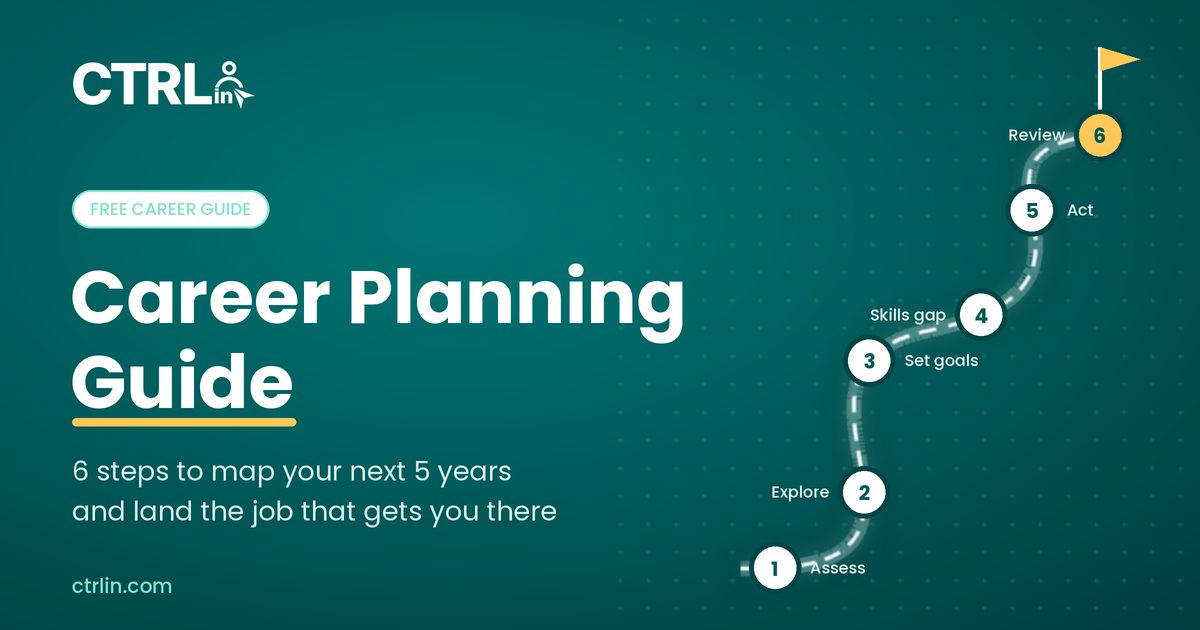
A career plan is a written map of where you want to be, the skills you need to get there, and the steps you'll take each quarter to close the gap. This guide walks you through building one in six steps, then shows you how to turn that plan into a resume, portfolio, and cover letter that actually get interviews.
Most people don't lack ambition. They lack a system. They take the next job that shows up, update their resume only when they're desperate, and wonder five years later why they're not where they hoped.
Career planning fixes that. It won't predict the future, but it gives every job search, course, and side project a clear reason to exist.
What is career planning (and why most plans fail)?
Career planning is the ongoing process of assessing yourself, exploring options, setting goals, and taking deliberate action to reach them. It's not a one-time exercise you do in college. It's a loop you revisit every six to twelve months.
A good career plan answers four questions:
- Where am I now? Your current skills, experience, strengths, and values.
- Where do I want to go? A target role, industry, income, or lifestyle within 1, 3, and 5 years.
- What's the gap? The skills, credentials, and experience you're missing.
- How will I close it? Concrete actions with deadlines.
Why most career plans fail
Most plans fail for predictable reasons. The goals are too vague ("get a better job"), there's no deadline, or the plan lives in someone's head instead of on paper.
The biggest failure point is execution. People do the reflection work, then never update the tools employers actually see: their resume, portfolio, and online profile. A plan that never reaches a recruiter is just a journal entry.
How to create a career plan in 6 steps
Step 1: Run an honest self-assessment
Start with what you already have. Write down your hard skills, soft skills, the work that energizes you, and the work that drains you.
Useful prompts:
- Which three accomplishments am I proudest of, and what skills did they use?
- What do colleagues come to me for?
- Which values are non-negotiable: salary, remote work, stability, creativity, impact?
Tools like the Holland Code (RIASEC) or CliftonStrengths can add structure, but your own track record is the best evidence.
Step 2: Explore and research career options
Now look outward. Shortlist two to four roles that match your strengths and values, then research each one properly.
- Read 20 to 30 real job descriptions for each role and note the skills that repeat.
- Check salary ranges, growth outlook, and remote availability.
- Have informational chats with two or three people already doing the job.
Job postings are the most underrated research tool. They tell you exactly what employers want, in their own words. CTRLin's jobs board is a quick place to start scanning live roles.
Step 3: Set SMART career goals
Turn your research into goals that are Specific, Measurable, Achievable, Relevant, and Time-bound. Split them by horizon:
| Horizon | Example goal |
| 1 year | Land a junior data analyst role paying at least $60k |
| 3 years | Get promoted to data analyst II and lead one reporting project |
| 5 years | Move into an analytics manager role managing 3 to 5 people |
Short-term goals should be almost fully in your control. Long-term goals can be more directional.
Step 4: Identify your skills gap
Compare the skills that kept showing up in job descriptions against the skills you listed in Step 1. The difference is your skills gap.
Sort each gap into one of three buckets: learn (a course or certification), prove (a project or portfolio piece), or show (you already have it but it's missing from your resume). The third bucket is more common than people think.
Step 5: Build a quarterly action plan
Break each goal into actions you can finish in 90 days. For example:
- Complete the Google Data Analytics certificate by March 31
- Publish two case studies in an online portfolio
- Update resume with quantified results and tailor it to each application
- Apply to 10 targeted roles per week
- Request one informational interview per week
Step 6: Review and adjust every quarter
Set a recurring calendar reminder. Every quarter, check progress against your goals, drop what isn't working, and add what you've learned. A career plan is a living document, not a contract.
Turn your career plan into job applications that get replies
Your career plan only pays off when it shows up in the documents recruiters read. Every goal you set should change how your resume, portfolio, and cover letter tell your story.
Rewrite your resume around your target role
A resume built for your last job won't win your next one. Use the keywords you collected in Step 2, lead with the skills your target role values most, and quantify results wherever you can ("cut report turnaround by 40%" beats "responsible for reports").
Most mid-size and large employers screen resumes through an applicant tracking system (ATS) first. That means clean formatting, standard section headings, and no text trapped inside images or tables.
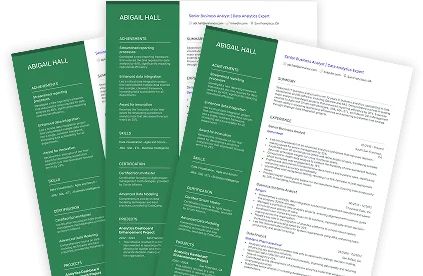
CTRLin's free resume builder handles this for you. Its ATS-friendly templates come in Classic, Modern, Creative, Professional, and Minimal styles, so you can match the tone of your target industry without fighting formatting. Build your profile once, then generate tailored versions for each role on your shortlist.
Prove your skills with a portfolio
Remember the "prove" bucket from your skills gap? A portfolio is where that proof lives. Case studies, projects, and results give hiring managers evidence a resume bullet can't.
With CTRLin's portfolio builder, you can publish a professional portfolio without writing code and share it with one link. Add it to your resume header, LinkedIn, and email signature.
Personalize every cover letter
A cover letter is your chance to connect your career plan to the employer's needs: why this role, why now, and what you'll bring. Keep it to three or four short paragraphs and reference something specific about the company.
CTRLin's cover letter builder gives you templates that match your resume design, so your whole application looks consistent.
Keep one master profile
Your career plan changes every quarter, and your application materials should too. Keeping your experience, skills, and achievements in a single CTRLin profile means each update flows into your resume, portfolio, and cover letters instead of living in five outdated files.
Career planning at every stage
The six steps stay the same, but your priorities shift depending on where you are.
Students and recent graduates
Focus on exploration and proof. Try internships, freelance gigs, and campus projects to test which work you enjoy. With little formal experience, a portfolio of class and personal projects often matters more than your resume.
Put education, projects, and relevant coursework near the top of your resume, and treat your first job as a learning role rather than a final destination.
Mid-career professionals
Your question shifts from "what can I do?" to "what do I want to be known for?" Decide whether you're heading toward management, deep specialist expertise, or independent consulting.
Audit your resume for achievements from the last three to five years, and cut older detail that no longer supports your direction.
Career changers
Changing fields is where career planning pays off most. Map your transferable skills (project management, client communication, data analysis) directly to the language of your new field.
Build two or three portfolio projects in the new field before you apply. A skills-based or hybrid resume format helps you lead with capability instead of job titles. An online portfolio, like one built with CTRLin, gives recruiters a fast way to see you can already do the work.
7 career planning mistakes to avoid
- Setting goals without deadlines. "Someday" never arrives. Put a date on every goal.
- Chasing titles instead of skills. Titles vary by company; skills travel with you.
- Planning in isolation. Mentors, managers, and peers spot blind spots you can't see.
- Ignoring the market. A plan that doesn't match real job descriptions will stall.
- Letting your resume go stale. Update it every quarter, not only when you're job hunting.
- Sending one generic application. Tailor your resume and cover letter to each role.
- Never revisiting the plan. Your interests and the job market both change. Your plan should too.
Career planning FAQs
What are the 5 stages of career planning?
The five commonly cited stages are self-assessment, career exploration, goal setting, action planning, and review. This guide adds a separate skills-gap step because it's where most plans become actionable.
How often should I update my career plan?
Review it every quarter and do a deeper rewrite once a year, or whenever you change jobs, get promoted, or your priorities shift.
What should a career plan include?
A snapshot of your current skills, 1, 3 and 5-year goals, a list of skill gaps, a 90-day action plan, and a review date.
Is it too late to plan my career at 30, 40, or 50?
No. Experienced professionals often plan more effectively because they know what they don't want. Focus on transferable skills and recent achievements.
How does a resume fit into career planning?
Your resume is the output of your career plan. It translates your skills and goals into a document employers use to decide whether to interview you, so update it every time your plan changes.
Start your career plan today
You don't need a perfect five-year vision to start. Spend one hour this week on Steps 1 through 3, write down one goal for the next 90 days, and schedule your first quarterly review.
Then put your plan to work. Create your free CTRLin account to build an ATS-friendly resume, a shareable portfolio, and a matching cover letter in minutes, so you're ready the moment the right opportunity appears.
Ready to take the next step? Build your resume free with CTRLin →
Get Exclusive Updates & Resume Builder Features
Subscribe to our newsletter and stay ahead with the newest tools, design updates, and job-winning tips.